ISO 9001:2026 has been published. What changes in the “context of the organization” – and why the context analysis often stays just a document for the audit unless it's linked to strategy work.

Part 1 of this series looked at top management's responsibility within the quality management system. Yesterday, on September 16, 2026, ISO officially published the new revision. Time to turn to another central chapter: the “context of the organization” (clause 4).
At a glance
The term sounds abstract, but it refers to something very concrete: all the internal and external conditions that act on a company and influence what it does. Externally, for example, market developments, competition, legal requirements, customer requirements, or supply chain risks. Internally, for example, the company's own culture, available resources, expertise, or its strategy itself. One example: for an automotive supplier, this includes its customers' CO2 requirements, the shortage of skilled workers in the region, and its own production capacity.
According to ISO 9001, a company is meant to understand exactly this environment before it designs its quality management system. The reason is simple. A management system planned without regard to its own environment ultimately helps little and only costs resources and money.
Clause 4 requires companies to systematically capture this environment: internal and external issues (4.1), the needs and expectations of relevant interested parties such as customers, suppliers, authorities, or employees (4.2), the scope of the QMS (4.3), and the interaction of its processes (4.4). In short: before a company decides how it will ensure quality, it should understand the environment in which it does so.
There is no fundamental restructuring; the 2015 structure is retained. In terms of content, however, quite a bit is shifting.
Climate change explicitly becomes part of the context analysis. What was introduced as an addition through Amendment 1 in 2024 is now firmly anchored in the standard's text. Companies must assess whether and how physical risks (e.g. extreme weather, supply chain disruptions), regulatory developments, or changed expectations of interested parties affect their management system.
The link to corporate strategy is required more clearly. The context is no longer meant to be a one-off analysis for certification, but should visibly feed into strategic direction and quality objectives.
Sustainability moves closer to the quality topic, without ISO 9001 thereby becoming an ESG standard. Customer requirements and societal expectations regarding sustainability are increasingly seen as part of the organization's context.
The assessment of interested parties is expected to become more systematic, with a clearer expectation that needs and expectations are actually reviewed regularly, rather than documented just once.
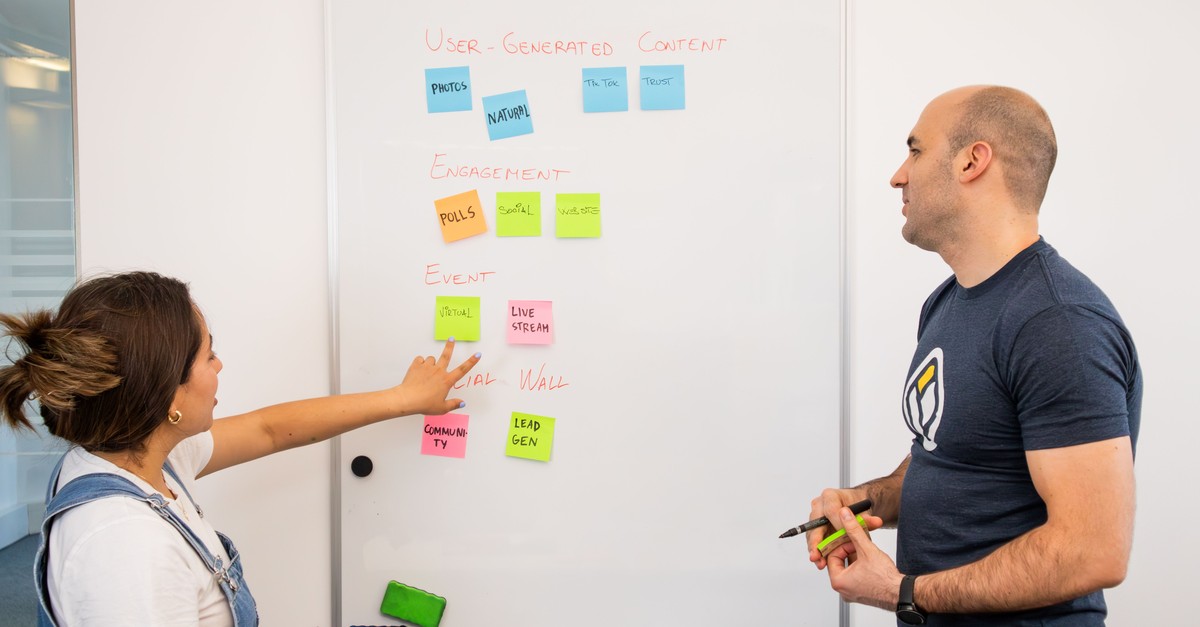
At many companies I work with in audits and projects, there is a 'piece of paper' with a context analysis, a SWOT table, and a list of interested parties – updated once a year, shortly before the ISO 9001 audit. It often has little to do with actual strategic planning: it lives in its own document, not in the minds of management or the organization. Yet it is exactly this way of thinking that distinguishes successful companies from less successful ones – only a few recognize that.
This is exactly where the new revision comes in. Context analysis and strategy work are meant to grow together, not exist side by side.
Many companies unconsciously assume they can simply extrapolate: that a company successful in the market for a long time can carry the same behaviors forward into the future. This overlooks the fact that the context has already changed compared to the past – and will change faster and more extensively in the future than past experience would suggest. Success therefore increasingly belongs not to the companies with the longest track record in the market, but to those able to assess changes in their context regularly and quickly, and to derive concrete actions for their strategy from them.
A simple test question makes this tangible: in which strategic meeting of management – aside from the management review, to the extent it even serves that function – are the topics identified in the context actually followed up on, evaluated, and translated into strategic decisions for the company? For most companies I work with, the answer is sobering: none. Context analysis and strategy work simply take place in separate rooms.
This is exactly where the new revision comes in. Context analysis and strategy work are meant to grow together, not exist side by side.
Four points are worth acting on already now.
With QualiTEx Global, I support companies in building the context of the organization so that it works not only for the next audit, but delivers real value for strategic decisions.
For certified companies: with yesterday's publication, the three-year transition period begins – enough time to approach the changeover carefully rather than under time pressure.
Part 3 of this series will look at the next key chapter of the revision.
Let's discuss, without obligation, what this development means for your company.